
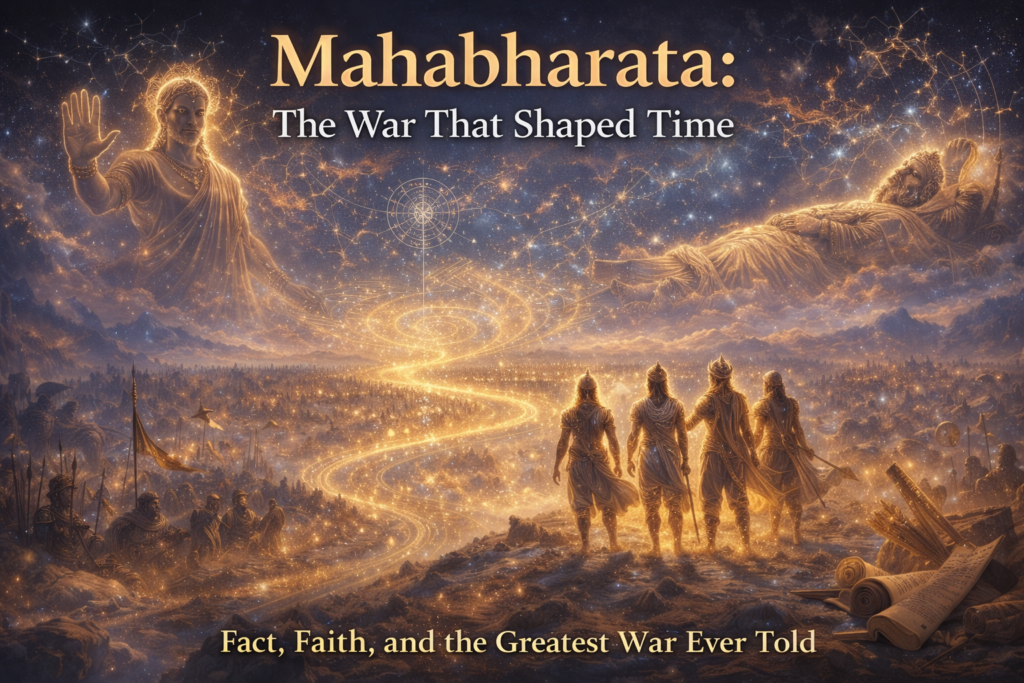
The dice had fallen. Dharma had been mocked. The Pandavas, once kings, now stood stripped of wealth, throne, and dignity. Draupadi, the fire-born queen, had been dragged into the court, insulted, humiliated, yet preserved by her faith in Krishna. The vows taken that day — Bhima’s thunderous oath to drink Dushasana’s blood, Draupadi’s vow to leave her hair unbound until it was washed in Kaurava blood — were not forgotten. They became the sparks that would burn into Kurukshetra.
But before the war, came exile. Thirteen years of wandering, thirteen years of hardship, thirteen years where the fire of vengeance was tempered in the steel of discipline.
The First Days of Exile
The Pandavas left Hastinapura with heavy hearts. They had been cheated, betrayed, humiliated. But they did not break. Yudhishthira walked with calm, though shame weighed upon him. Draupadi, once queen of Indraprastha, now walked barefoot into the forest, her silk replaced with bark cloth. Bhima carried his anger like a storm. Arjuna, silent, sharpened his focus. Nakula and Sahadeva followed, their loyalty unwavering.
In those first days, Draupadi turned to Yudhishthira and cried: “Why did you allow this? Why did you, the son of Dharma, stake me like an object? Why did you endure the humiliation in silence? Where was your anger?”
Yudhishthira replied with tears: “I am bound to dharma. I played the game because it was my duty as a Kshatriya to accept challenge. I suffered the loss because it was my karma. I did not resist, for I will not abandon righteousness, even in despair.”
But Draupadi’s fire did not soften. “Dharma without courage is weakness. Justice without action is empty. Remember, Yudhishthira, silence before adharma is sin.”
Her words echoed in his soul. Even Yudhishthira, the calmest of men, felt the sting.
Bhima’s Vows
Bhima, however, needed no reminder. His blood roared with fire. He turned to Draupadi and swore: “Hear my oath, O queen. I will one day tear open Dushasana’s chest and drink his blood for what he did to you. And as for Duryodhana — I will break his thigh with this mace, the very thigh he slapped in mockery before you.”
The forest trembled with his roar. The vow was not only Bhima’s voice — it was dharma’s own thunder, promising justice.
Arjuna’s Silence
Arjuna said little. But in his silence burned resolve. He knew weapons alone would not be enough. He would need divine arms, celestial power, wisdom beyond mortal. His exile would become his training ground, his tapasya, his preparation for Kurukshetra.
The Life in the Forest
The Pandavas wandered to Kamyaka, to Dvaitavana, to forests filled with sages. They lived simply, eating roots and fruits, clad in bark, their royal pride humbled. Yet in those forests, they gained more than they lost.
For they met sages who blessed them with wisdom. They listened to tales of Rama, of ancient kings, of dharma tested and upheld. They learned that suffering is not punishment, but purification. Exile was not defeat, but discipline.
The forests gave them allies. Rishi Dhaumya guided them in rituals. Sage Markandeya told them stories of resilience — of Sita’s trial, of kings who endured worse and yet rose. The Pandavas learned that dharma shines brightest in adversity.
Draupadi, though humiliated, did not lose her fire. In the forest she reminded them daily: “Remember the dice hall. Remember the insult. Remember the silence of elders. Do not rest until justice is done.” Her words were fuel, her pain a weapon sharper than arrows.
Krishna’s Visit
During exile, Krishna came to meet them. He embraced Draupadi and said: “Do not weep, O fire-born one. I was not present in Hastinapura that day, or this insult would never have happened. But know this: your humiliation is mine. Your vow is mine. The Kauravas will pay. Dharma may bend, but it never breaks. Trust me, the day will come when justice will roar like thunder.”
Draupadi bowed, her heart strengthened. In Krishna she saw the assurance that the world itself would rise to defend her.
Stories that Strengthened Resolve
In the forest, sages told them the story of Rama — how he endured exile, how Sita was taken, how dharma triumphed in the end. They heard the tale of Nala and Damayanti — how a king lost his kingdom through dice but regained it through resilience. These stories were not entertainment — they were mirrors, reminders that their suffering was part of a larger tapestry.
Yudhishthira, especially, listened. He began to understand that dharma is not passivity. Dharma requires action, guided by truth. His exile was teaching him what his throne had not.
Encounters with Danger
Exile was not peaceful. The Pandavas faced demons and dangers. Bhima slew rakshasas who threatened sages. Arjuna defended the group with unmatched skill. Once, Jayadratha, king of Sindhu, attempted to abduct Draupadi while the Pandavas were away. Draupadi cried out, and Bhima and Arjuna pursued him, capturing him easily. Bhima wished to kill him, but Yudhishthira spared his life, letting him go with humiliation. That mercy, however, would echo in Kurukshetra, for Jayadratha would return as an enemy.
Each trial hardened them, teaching vigilance, patience, and restraint.
Draupadi’s Longing
Yet in quiet moments, Draupadi wept. She asked Yudhishthira: “Where is dharma, when a queen is dragged by her hair? Where is justice, when elders sit silent? Where is honor, when the mighty are bound by dice?”
Yudhishthira bowed his head. “Perhaps dharma is slow, but it never fails. The wheel of time turns. Those who mocked you will fall. Be patient, O queen, for the gods do not forget.”
Her tears watered the seeds of war. Her endurance became a lesson for all: dignity may be stripped by others, but only you decide whether it dies. Draupadi’s dignity survived exile, and in that survival, she carried the Pandavas’ honor on her shoulders.
The Fire of Vows
Exile was not defeat. It was fire. It burned away weakness, pride, and comfort. It forged resolve, unity, and vision.
Bhima swore vengeance.
Draupadi swore justice.
Arjuna swore preparation.
Yudhishthira swore patience.
Krishna swore support.
The vows of the forest became the arrows of Kurukshetra.
Lessons for Us
The exile teaches us eternal truths.
Dharma in Hardship: Life will strip you of comfort, of wealth, of honor. Do not despair. Exile is not the end. It is the forge where destiny hardens you.
The Power of Vows: Injustice must not be forgotten. Vows, when born of truth, give fire to the soul.
The Danger of Silence: The dice hall shows that silence in the face of wrong is itself wrong. In exile, the Pandavas learned that their silence must end.
Faith in Darkness: Draupadi’s prayer to Krishna is proof that faith is armor. When the world abandons you, the divine does not.
Transformation through Pain: Yudhishthira lost everything, yet gained wisdom. Arjuna lost his kingdom, yet gained weapons. Bhima lost his throne, yet gained fire. What you lose in suffering, you often regain in strength.
The Pandavas walked through the forest, but they were walking toward Kurukshetra. Every step in exile was a step toward war. Every humiliation was a sharpening blade. Every vow was a fire kept alive.
When you walk through your own exile — when life strips you of what is yours, when the world mocks you, when injustice reigns — remember the Pandavas. Remember Draupadi. Remember Krishna’s words: “Dharma may be slow, but it never fails.”
Exile is not weakness. Exile is preparation. The fire will one day become the arrow. The vow will one day become the victory.
If this story moved you, if it reminded you that greatness lies in choice, not birth, support this journey of dharma with a symbolic donation of eleven dollars. support this journey of dharma with a symbolic donation of eleven dollars. And unlock Dharma Vault, claim it through the link in the description.