
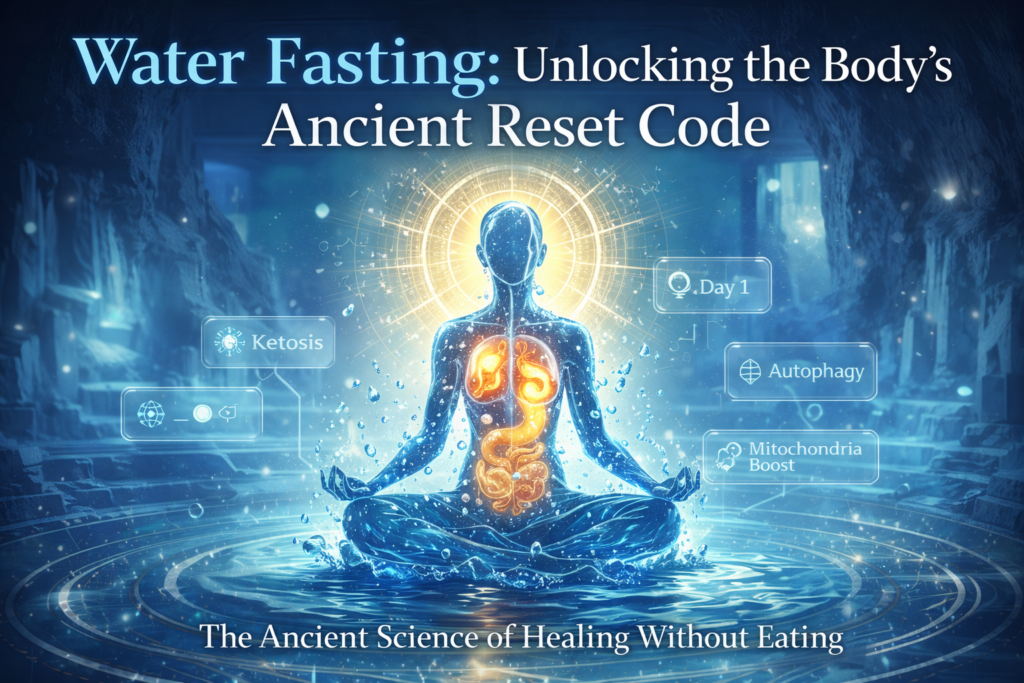
Chapter 5: The Fasting Period
Now that you’ve prepared physically and mentally, it’s time to begin your water fast. This chapter guides you through the fasting process, outlining what to expect, how to manage common challenges, and how to ensure your fast is as effective and safe as possible.
- The First 24 Hours
The initial phase of fasting can be the most challenging as your body adjusts to the absence of food.
• What’s Happening Metabolically:
o Your body uses stored glycogen (short-term energy storage) to maintain blood glucose levels.
o Insulin levels begin to drop, signaling a transition from sugar-burning to fat-burning.
• Common Experiences:
o Hunger pangs, low energy, or cravings may occur but will usually pass after the first 16–24 hours.
o Ghrelin (the hunger hormone) peaks around typical meal times but diminishes as you continue fasting.
• Tips for Success:
o Stay hydrated by drinking plenty of water.
o Engage in light activities like walking or reading to distract yourself from hunger.
- Entering Fat-Burning Mode (24–48 Hours)
As glycogen stores deplete, your body shifts to burning fat for energy.
• What’s Happening Metabolically:
o The body transitions to ketosis, where fat is broken down into ketones to fuel the brain and muscles.
o Insulin levels drop further, allowing fat cells to release stored fatty acids.
• Common Experiences:
o You may feel an increase in mental clarity as ketones become the brain’s primary energy source.
o Hunger typically diminishes significantly during this phase.
• Tips for Success:
o Consider adding electrolytes like sodium, potassium, and magnesium to maintain hydration and prevent headaches or fatigue.
o Practice mindfulness or journaling to reflect on your fasting goals and progress.
- The Deep Fasting State (48–72 Hours)
The benefits of fasting become more pronounced as your body adapts to this metabolic state.
• What’s Happening Metabolically:
o Ketosis intensifies, and fat becomes the primary energy source.
o Autophagy (cellular repair) is significantly upregulated, clearing out damaged cells and recycling cellular waste.
o Human growth hormone (HGH) levels rise, promoting muscle preservation and fat loss.
• Common Experiences:
o Many report heightened mental focus, improved mood, and even feelings of euphoria.
o Energy levels may stabilize or even increase due to elevated norepinephrine levels.
• Tips for Success:
o Avoid strenuous physical activity; opt for light stretching or yoga instead.
o Focus on hydration and electrolyte balance to avoid dizziness or cramping.
- Managing Challenges
Even experienced fasters may encounter difficulties. Here’s how to handle common challenges:
• Hunger: Drink water or herbal teas to curb cravings.
• Fatigue: Rest or take short naps if you feel tired.
• Headaches: Add a pinch of salt to your water or use an electrolyte supplement.
• Dizziness: Stand up slowly and stay hydrated; if symptoms persist, consider ending the fast.
- What’s Allowed During a Water Fast?
While the term “water fast” suggests consuming only water, some options may enhance your experience without breaking the fast.
• Allowed:
o Water (still or sparkling)
o Electrolytes (sodium, potassium, magnesium)
o Zero-calorie beverages like black coffee or unsweetened herbal tea (optional)
• Avoid:
o Any food, flavored drinks, or supplements containing calories or sugar.
- Listening to Your Body
While fasting can be highly beneficial, it’s crucial to know when to stop.
• Signs to Stop Fasting:
o Persistent dizziness, confusion, or extreme fatigue.
o Severe headaches or an irregular heartbeat.
o Intense discomfort that doesn’t improve with hydration or rest.
• Emergency Measures:
o Break your fast with small, easily digestible foods like broth or soft fruits.
o Seek medical attention if symptoms persist after refeeding.
Summary
The fasting period is a transformative time for your body and mind. By understanding the stages of fasting and addressing challenges with simple strategies, you can maximize the benefits while staying safe and comfortable.