chatgpt image jan 25, 2026, 04 38 59 pm

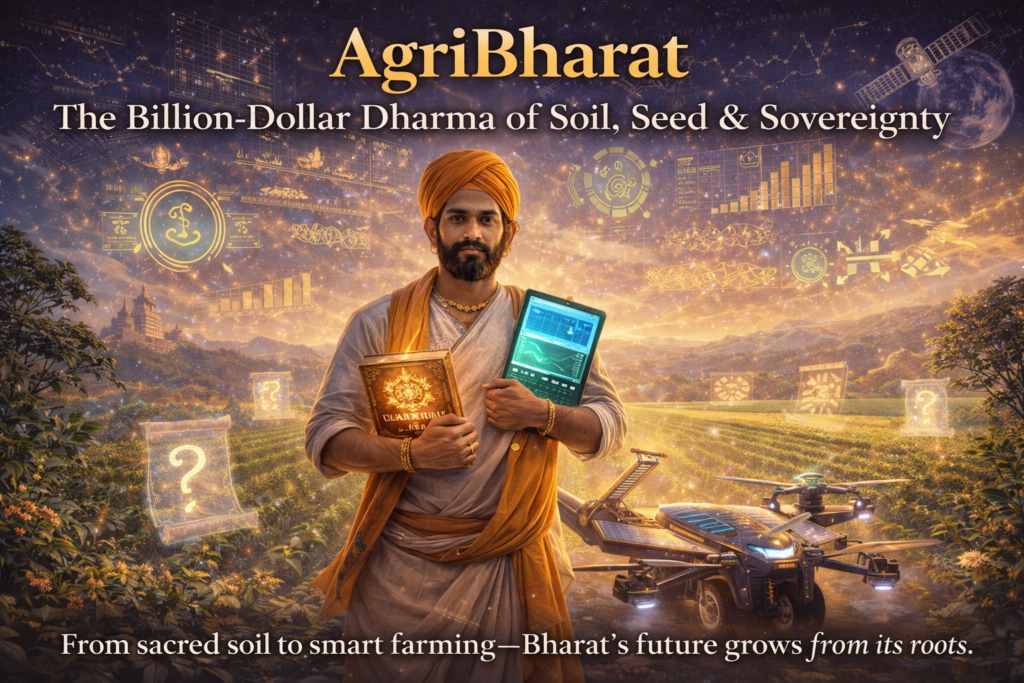
Chapter 7: Global Awakening – Why the World Is Looking to Bharat’s Fields

🪔 Opening Quote:“What Bharat forgot, the world is remembering.”

🌍 The West Is Looking East
For centuries, the West projected technological superiority and industrial agriculture as the future.
Big tractors.
Bigger farms.
Chemical fertilizers.
Genetically modified seeds.
High-yield, low-diversity monocultures.
But now, after decades of soil depletion, health crises, and climate chaos, the West is turning back — and looking… to us.
To Bharat.
To our ancestral farming wisdom.
To our sustainable, seasonal, and spiritual approach to agriculture.
The very practices once labeled “backward” are now being called solutions.


🌿 The Global Organic Movement Is Desi at Heart
“Organic farming” sounds modern — but it’s ancient in Bharat.
• No chemical inputs
• Composting with cow dung
• Seasonal cropping
• Rainwater harvesting
• Polyculture fields
• Deep respect for natural rhythms
This is not innovation — it’s remembrance.
Today:
• Western supermarkets are filled with turmeric, moringa, ashwagandha
• Yoga studios talk about “farm-to-mat” eating
• UN agencies are praising millets
• Urban farms are mimicking Indian permaculture
The world is catching on.
But Bharat must catch up to itself.


🥣 Ayurveda, Diet & the Soil-Health Connection
Global wellness trends now repeat what our grandmothers knew:
• Food is medicine
• Seasonal eating = immune strength
• Soil health = gut health
• Ghee is good
• Spices are therapy
But here’s the key:
You can’t have Ayurvedic health with chemical farming.
You can’t preach wellness while poisoning the food chain.
So as the world embraces Ayurveda, it must also embrace Bharatiya agriculture — the way we used to farm when crops had consciousness.


🌾 Climate Change Has Made Ancient Wisdom Modern
As the planet warms, resources shrink, and disasters increase — industrial farming is struggling.
What works now?
• Drought-resilient millets
• Flood-tolerant desi rice varieties
• Agroforestry that sequesters carbon
• Zero Budget Natural Farming (ZBNF) with zero external input cost
• Community grain banks
All of these are rooted in Indian tradition.
In a climate-challenged world, Bharat’s old ways may be the planet’s new hope.


🌎 International Support for Indigenous Models
• The UN declared 2023 as the International Year of Millets, led by India
• FAO (Food and Agriculture Organization) is promoting agroecology — deeply aligned with Indian rural models
• Global climate funds are now investing in natural farming, especially in India and Africa
• Countries like Bhutan and Sri Lanka are seeking help from Indian farmer networks for knowledge transfer
Ironically, foreign universities are studying Indian farmers…
while our own children are running away from the farm.
This must change.


💰 Export Potential – If We Stay Ethical
There is a huge global market for:
• Organic spices, teas, and grains
• Ayurvedic herbs and oils
• Hand-grown heritage rice and pulses
• Jaggery, cold-pressed oils, pickles, ghee
• Farm stays, retreats, and experiential tourism
But it must be done:
• Ethically — with fair trade for farmers
• Sustainably — no greenwashing
• With Bharat’s soul intact — not just as another commodity exporter
We must sell our surplus, not our soil or self-respect.


🚨 The Risk: Losing Our Lead While the World Wakes Up
The greatest irony?
• As the world moves to natural, Bharat is still subsidizing chemicals
• As others revive millets, our kids chase pizza and polished rice
• As foreigners pay ₹500 for desi ghee, many Indian homes no longer use it
We are at a crossroads.
Bharat must decide:
“Do we become leaders in regenerative farming — or consumers of what we invented?”


🔁 It’s Time to Reclaim Our Leadership Role
We don’t need to imitate global trends.
We created them — long before they had names.
Let’s not be the country that feeds the world but forgets to feed itself well.
Let’s not sell sacred systems for foreign approval.
Let’s not outsource our wisdom.
“It’s time for Bharat to lead the world — by going back to the land.”


🧠 Sow This Thought (Takeaway):
The world is turning toward sustainability, slow food, and conscious farming — all of which Bharat has practiced for centuries.
Let’s not wait for the world to certify our value.
Let’s start valuing it ourselves.
“The world doesn’t just want Indian food. It wants the Indian way of growing it.”


✍️ Chapter Summary (2 lines):
This chapter explores the global shift toward sustainable agriculture and how Bharat’s traditional practices are now being recognized as the future of farming.
Bharat must lead by example — or risk selling its soul along with its produce.


🪩 Suggested Highlight Quote:
“Bharat doesn’t need to catch up to the West. The world is trying to catch up to Bharat’s roots.”

0

Subtotal